


.png&w=384&q=75)
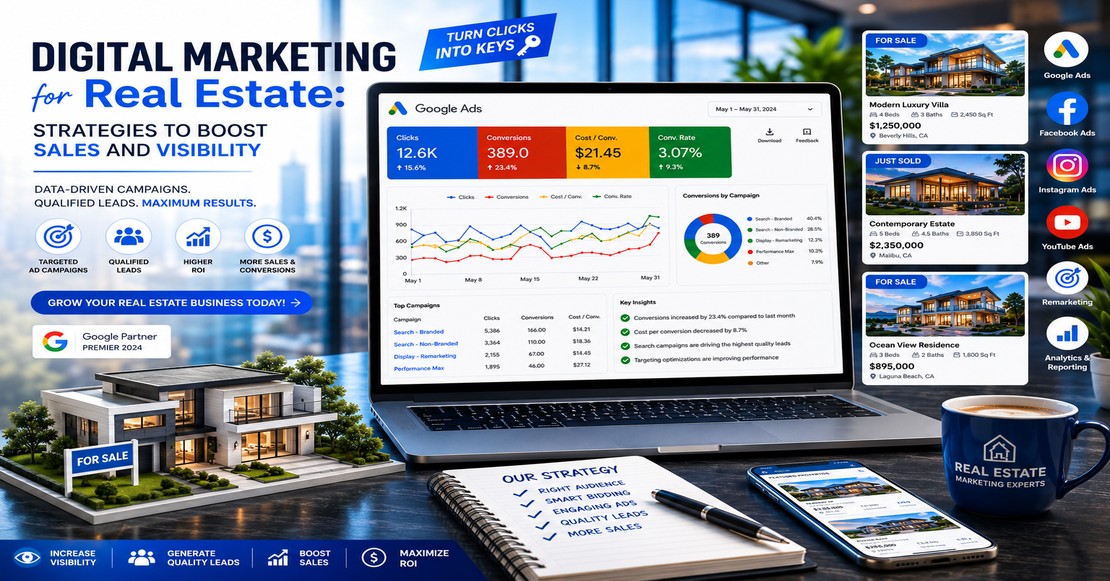
The real estate industry has undergone a significant transformation in the digital era. With potential buyers relying on the internet for property searches, digital marketing for real estate has become indispensable for businesses aiming to capture a larger audience, generate leads, and drive sales. Traditional marketing methods alone are no longer sufficient, and real estate businesses must leverage digital strategies to stay competitive.
Why Digital Marketing is Essential for Real Estate
With the increasing use of online platforms, real estate buyers and investors conduct thorough research before making any decisions. Digital marketing for real estate enables businesses to engage with their target audience, build trust, and showcase properties effectively. The key advantages include:
-
Broader Reach:Digital marketing helps real estate businesses target local and global buyers effortlessly.
-
Cost-Effectiveness:Online marketing is more affordable than traditional advertising methods like billboards or TV commercials.
-
Enhanced Engagement:Social media, email marketing, and personalized campaigns create direct communication with potential buyers.
-
Performance Tracking:Digital marketing allows businesses to analyze campaign success through metrics like website traffic, lead conversion rates, and engagement.
Key Digital Marketing Strategies for Real Estate
1.Search Engine Optimization (SEO)
SEO helps real estate businesses rank higher on search engines, increasing visibility and organic traffic. The key elements include:
-
Local SEO:Optimizing Google My Business profiles and using location-based keywords.
-
On-Page SEO:Enhancing website content, including property listings with rich descriptions and high-quality images.
-
Backlinking:Earning links from credible sources to boost search rankings.
-
Technical SEO:Ensuring fast website speed, mobile-friendliness, and proper site indexing.
2.Pay-Per-Click Advertising (PPC)
PPC campaigns on Google Ads and social media platforms allow real estate companies to target specific audiences.
-
Geo-targeting:Displaying ads to users searching for properties in a particular area.
-
Keyword Bidding:Using high-intent keywords like “luxury homes for sale” or “affordable apartments in [location].”
-
Remarketing:Targeting users who visited the website but did not convert.
3.Social Media Marketing
Social media platforms like Facebook, Instagram, and LinkedIn are powerful tools for real estate marketing.
-
Property Showcasing:High-quality images and video tours of properties attract buyers.
-
Live Q&A Sessions:Engaging potential buyers through live interactions.
-
Targeted Ads:Running paid campaigns to reach specific demographics.
4.Content Marketing & Blogging
A well-structured blog helps establish credibility and improves SEO. Some content ideas include:
-
Market Trends & Analysis:Educating buyers on real estate market conditions.
-
Home Buying Tips:Providing insights for first-time homebuyers.
-
Neighborhood Guides:Highlighting local amenities and attractions.
-
Case Studies & Success Stories:Demonstrating past success to attract new buyers.
5.Video Marketing
Video marketing enhances engagement and provides a more immersive experience.
-
Virtual Property Tours:Offering 360-degree property views.
-
Client Testimonials:Sharing positive experiences to build trust.
-
Informational Videos:Addressing common real estate queries.
-
Behind-the-Scenes Content:Offering insights into the real estate process.
6.Email Marketing
Email marketing remains a vital tool for nurturing leads and maintaining client relationships.
-
Personalized Email Campaigns:Sending tailored property recommendations.
-
Newsletters:Keeping potential buyers informed about new listings and real estate updates.
-
Automated Follow-ups:Engaging with leads who have shown interest in properties.
-
Exclusive Offers:Providing limited-time deals to incentivize purchase decisions.
7.Influencer & Partnership Marketing
Collaborating with real estate influencers and local businesses can expand reach and credibility.
-
Influencer Promotions:Partnering with real estate bloggers and social media influencers.
-
Cross-Promotions:Engaging with interior designers, home decorators, and moving services.
-
Affiliate Marketing:Rewarding partners who refer potential buyers.
8.Online Reputation Management
A strong online reputation is essential for real estate businesses.
-
Managing Online Reviews:Encouraging satisfied clients to leave positive feedback.
-
Crisis Management:Addressing negative comments professionally and promptly.
-
Community Engagement:Participating in online discussions and forums.
9.Chatbots & AI Integration
Artificial Intelligence (AI) is revolutionizing customer interactions in real estate.
-
24/7 Chatbots:Answering property-related queries instantly.
-
AI-Powered Recommendations:Offering personalized property suggestions.
-
Lead Qualification:Identifying high-potential leads through AI-driven analysis.
10.Webinars & Virtual Events
Hosting webinars and virtual property expos can drive interest and boost lead generation.
-
Expert Sessions:Educating buyers on market trends and investment strategies.
-
Virtual Open Houses:Showcasing properties in real-time to remote buyers.
-
Q&A Panels:Allowing direct interaction with real estate experts.
Conclusion
Implementing a strong digital marketing for real estate strategy is crucial for real estate businesses to thrive in the competitive market.Instant Info Solutionoffers tailored digital marketing services that enhance visibility, generate quality leads, and boost sales. By leveraging SEO, PPC, social media, content marketing, video campaigns, and AI-driven tools, real estate professionals can attract the right audience and convert potential buyers into loyal clients.
In today’s digital landscape, staying ahead means embracing innovation and continuously optimizing marketing efforts to meet evolving buyer preferences. A well-executed digital marketing plan ensures higher engagement, better brand visibility, and ultimately, more successful property transactions.